


W.E.B. Du Bois’s 1900 Data Portraits | Data, Dignity and Black Futures
Hall of Records • Black Futures
W.E.B. Du Bois’s 1900 Data Portraits | Data, Dignity and Black Futures
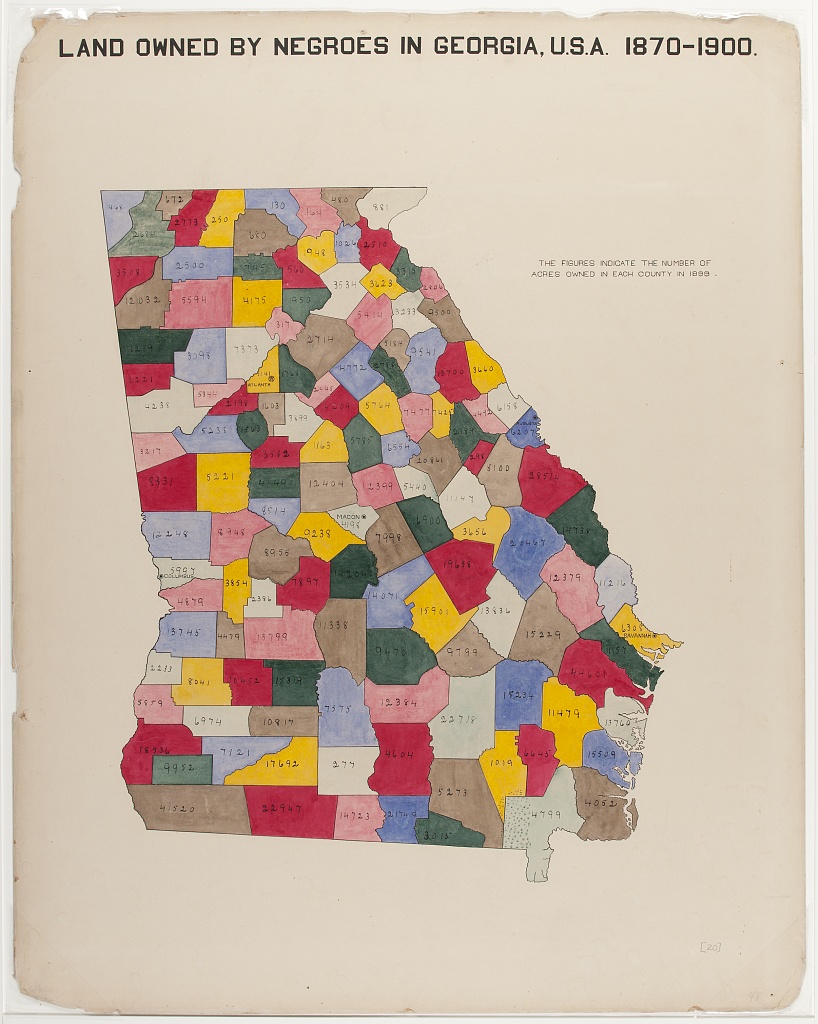
For the 1900 Paris Exposition, W.E.B. Du Bois and collaborators used hand-drawn charts and data to confront racist narratives with evidence of Black education, property, work and social progress.
Record Summary
At a Glance
The visualizations prepared for the Negro Exhibit at the 1900 Paris Exposition transformed statistics into a visual argument about Black life after emancipation. Their design, color and clarity remain striking more than a century later.
The Record
Evidence Made Visible
The Library of Congress preserves a group of charts prepared for the Negro Exhibit of the American Section at the 1900 Paris Exposition. They mapped and graphed economic and social conditions of African Americans, with special attention to Georgia.
Black Futures Lens
Data as Counter-Narrative
Du Bois used empirical evidence to challenge systems that represented Black people through caricature and deficiency. The charts insisted that Black communities could be documented on their own terms: as landowners, students, workers, families and builders of institutions.
Why This Record Matters
Information Can Be a Form of Power
The Hall places this record in Black Futures because the work was not only descriptive. It used information design to contest the present and argue for a different future—one in which Black progress could be seen, measured and defended.
Sources
Review the Record
- Library of Congress — Land owned by Negroes in Georgia, U.S.A. 1870–1900
- Library of Congress — Du Bois materials for the 1900 Paris Exposition
Featured image: Library of Congress, Prints & Photographs Division — W.E.B. Du Bois, “Land owned by Negroes in Georgia, U.S.A. 1870–1900.”
Image-use note: Library of Congress record lists no known restrictions on publication for this digital image.
This entry is an editorial archive built from the cited public record. Official findings are distinguished from allegations, family concerns, historical interpretation and unresolved questions. Reverify active cases and image rights before publication.





