


Sister Rosetta Tharpe | Gospel, Electric Guitar and the Sound Before Rock and Roll
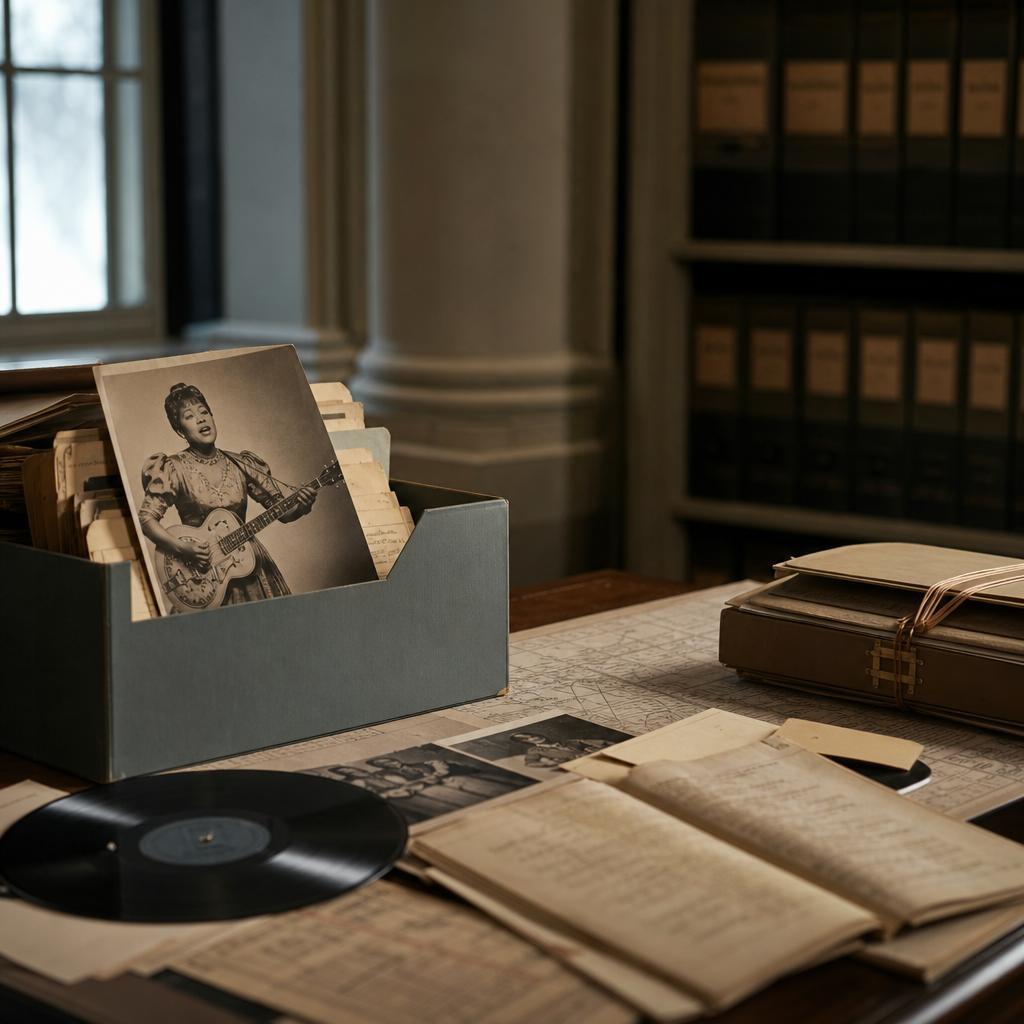
Hall of Records · Chamber of Knowledge
Sister Rosetta Tharpe brought electric guitar, gospel performance and rhythmic force into a sound that helped shape the vocabulary of rock and roll.

Record Overview
Sister Rosetta Tharpe was a gospel singer, songwriter and electric guitarist whose amplified playing and commanding stage presence connected church music to emerging popular forms.
Documented Record
Beginning in the 1930s and 1940s, Tharpe recorded gospel with electric guitar in ways that anticipated central elements of rock and roll. Her performances crossed sacred and secular venues and influenced generations of guitarists and singers.
Cultural Significance
Her record corrects a common historical distortion: the genealogy of rock and roll includes a Black queer woman gospel guitarist at its foundation.
Record Timeline
- 1915: Rosetta Nubin is born in Arkansas.
- 1930s: She begins recording professionally and performing in New York.
- 1940s: Electric-guitar recordings expand her national influence.
- 1964: She performs during the influential European Blues and Gospel Caravan tour.
- 1973: Tharpe dies in Philadelphia.
Living Archive
- How did church performance traditions shape Tharpe’s guitar style?
- Which later rock musicians directly acknowledged her influence?
- How did race, gender and sexuality affect the way her legacy was remembered?
Sources & Documentation
- Smithsonian ; Sister Rosetta Tharpe
- Encyclopedia of Arkansas ; Sister Rosetta Tharpe
- National Women’s History Museum ; Sister Rosetta Tharpe
Image note: Recovered Haus-hosted Hall image for Sister Rosetta Tharpe.
This archival entry is maintained inside the Chamber of Knowledge.
Records may be expanded, corrected or updated as additional reliable documentation becomes available.
Next Door Inside the Haus
Explore classes, research and practical learning inside the Academy.





