Robert Johnson | A Death Surrounded by Poisoning Stories and an Uncertain Record
Hall of Records • Justice & Accountability • Disputed Death
Hoodoo Heritage Month 2026 · HHM-011
Robert Johnson | A Death Surrounded by Poisoning Stories and an Uncertain Record
Robert Johnson died at 27 after becoming violently ill in the Mississippi Delta. Accounts of poisoned whiskey, a jealous husband, supernatural bargains and blues mythology later fused together around a death whose surviving medical record is far thinner than the legend.

Living history belongs in the record too.
Record Summary
At a Glance
Robert Johnson died on August 16, 1938, after becoming seriously ill while performing in the Mississippi Delta.
The most famous account says Johnson drank whiskey that had been poisoned by a jealous husband or boyfriend angered by Johnson’s attention toward a woman.
That story has been repeated for decades, including by musicians who knew Johnson, but the surviving documentary record does not provide the kind of medical or forensic evidence that would settle every detail of the story.
His death therefore sits at the intersection of oral history, eyewitness memory, blues folklore and incomplete documentation.
Documentary Record
What Can Be Established
Johnson was performing in the Greenwood area of Mississippi during the summer of 1938. He became seriously ill and remained sick for several days before dying on August 16 at the age of 27.
The National Park Service recounts the traditional account that Johnson was poisoned near the Three Forks Store in Quito, Mississippi, and was later taken to Greenwood, where he lingered before his death.
Johnson left behind only a small recorded catalog: 29 songs recorded during sessions in San Antonio in 1936 and Dallas in 1937. Those recordings later became enormously influential in blues, rock and American music.
His short life and limited paper trail helped create the conditions in which later stories could grow much larger than the surviving record.
Poisoning Account
The Whiskey Story
The most persistent account of Johnson’s death describes a bottle of whiskey that had been tampered with.
Blues musician David “Honeyboy” Edwards, who knew Johnson, later described being present around the time Johnson became ill and recalled a poisoning connected to a woman Johnson had been seeing.
In versions of the story repeated over the years, a jealous husband or boyfriend allegedly poisoned Johnson’s whiskey.
Some later retellings specify strychnine. That detail is frequently repeated, but surviving evidence does not provide a laboratory toxicology result proving exactly what substance, if any, was placed in Johnson’s drink.
The Hall therefore records poisoning as the dominant historical account, while separating that account from a medically proven toxicology finding.
Why This Is a Disputed Death Record
The Story Is Stronger Than the Forensic Record
Johnson died in rural Mississippi in 1938, at a time when the deaths of Black musicians and working-class Black people were not necessarily investigated or documented with the forensic rigor expected today.
There is no surviving modern-style autopsy or toxicology report that resolves the poisoning story beyond dispute.
That does not mean the poisoning accounts should be dismissed. Oral testimony is part of the historical record.
It does mean that the Hall should distinguish between:
- what people who knew Johnson later remembered,
- what biographers reconstructed decades later,
- what government or medical documentation actually establishes,
- and what later popular culture added to the story.
Blues Mythology
The Crossroads Story
Johnson’s death became inseparable from another story: that he had met the Devil at a crossroads and exchanged his soul for extraordinary musical ability.
The Library of Congress documents how strongly this legend became attached to Johnson’s public image; the crossroads in Clarksdale is now marked by a well-known guitar monument tied to the story.
But the crossroads bargain is legend, not documented biography.
Smithsonian scholarship has also cautioned that the myth can obscure Johnson’s actual labor as a musician — years of listening, traveling, practicing, learning from other performers and refining his technique.
Turning Black genius into a supernatural bargain can make the mythology more dramatic while simultaneously erasing the work required to become great.
Hoodoo Heritage Lens
Hoodoo Is Not the Same Thing as Selling Your Soul to the Devil
Hoodoo Heritage Month is an especially important place to make this distinction.
Black Southern spiritual traditions included roots, charms, prayer, protection work, divination, ancestor traditions and Biblical practice.
The later popular image of a Black bluesman making a Satanic bargain at midnight should not be treated as a simple description of Hoodoo.
Crossroads symbolism does appear in African and African American spiritual traditions, but the idea that Johnson literally sold his soul to Satan is a separate piece of blues mythology.
That distinction matters because popular culture often collapses Black folk spirituality, Hoodoo, supernatural storytelling and Christian ideas of the Devil into one thing when historically they are not identical.
Poisoning and Conjure
Why Poison Stories Carried Spiritual Weight
Poisoning occupied a complicated place in Southern Black folklore. Fear of being secretly harmed through food, drink, powders or hidden substances could overlap with stories about conjure.
In Hoodoo oral histories, people sometimes described being “fixed,” “poisoned,” “crossed” or “worked on” using language that could move between physical substances, spiritual interpretation and community rumor.
Because of that cultural vocabulary, a real poisoning story could easily accumulate supernatural meaning over time.
Johnson’s death became especially vulnerable to that process because he was already associated with songs about hellhounds, crossroads, spirits, danger and wandering.
The songs created a mythology-ready biography. His unexplained early death supplied the ending.
Music and Memory
His Songs Helped Build the Legend
Songs such as “Cross Road Blues,” “Hellhound on My Trail,” “Me and the Devil Blues” and other recordings gave later audiences language that seemed to fit the supernatural story constructed around Johnson.
But blues lyrics are not straightforward autobiography.
Blues musicians worked with metaphor, folklore, humor, sexual imagery, religious language, danger and supernatural symbolism.
A lyric about the Devil does not prove a literal supernatural event any more than a lyric about murder proves a confession.
The songs belong in the record because they helped shape Johnson’s mythology, not because they prove the mythology true.
Cultural Afterlife
Robert Johnson and the “27 Club”
Johnson died at 27, decades before popular culture began grouping musicians who died at that age into what became known as the “27 Club.”
His inclusion in that later cultural idea further strengthened the image of Johnson as a doomed or supernatural figure.
The historical Robert Johnson, however, was not a mythological character. He was a Black Mississippi musician working in the segregated South, traveling between communities, playing for paying audiences and building an extraordinary musical vocabulary in a remarkably short life.
Why This Record Matters
A Black Life Can Disappear Behind Its Own Legend
Robert Johnson became so mythologized that the legend can sometimes overshadow the man.
The poisoned whiskey matters. The eyewitness stories matter. The crossroads legend matters as folklore. The songs matter.
But they are different kinds of evidence.
The work of the Hall is to preserve all of those layers without pretending they are interchangeable.
Johnson’s death shows how quickly a poorly documented Black death can become a cultural myth — especially when music, spirituality, rumor and racial history are already wrapped around the person’s name.
Community Archive
What Hoodoo or Blues Story Did Your Family Carry?
Hoodoo Heritage Month submissions are reserved for the descendant Black American community, including Foundational Black American, Soulaan and ADOS contributors.
Family stories about musicians, juke joints, rootworkers, spiritual warnings, unexplained deaths, neighborhood legends or inherited traditions may contain pieces of Black cultural history that never entered formal archives.
The Hall welcomes those stories while asking contributors to distinguish firsthand memory, family tradition, community rumor and documented fact whenever possible.
Sources
Review the Record
- National Park Service — Robert Johnson in the Lower Mississippi Delta
- Smithsonian — David “Honeyboy” Edwards and the Poisoning Account
- Smithsonian — Robert Johnson, Biography and Myth
- Library of Congress — Robert Johnson “Crossroads” Legend
- Library of Congress — Robert Johnson Recordings and Musical Legacy
Research note: Poisoning is the dominant historical account of Johnson’s final illness, but later retellings vary regarding the perpetrator, motive and substance. The Hall therefore distinguishes eyewitness and oral-history testimony from details that cannot be independently established through surviving medical or forensic documentation.
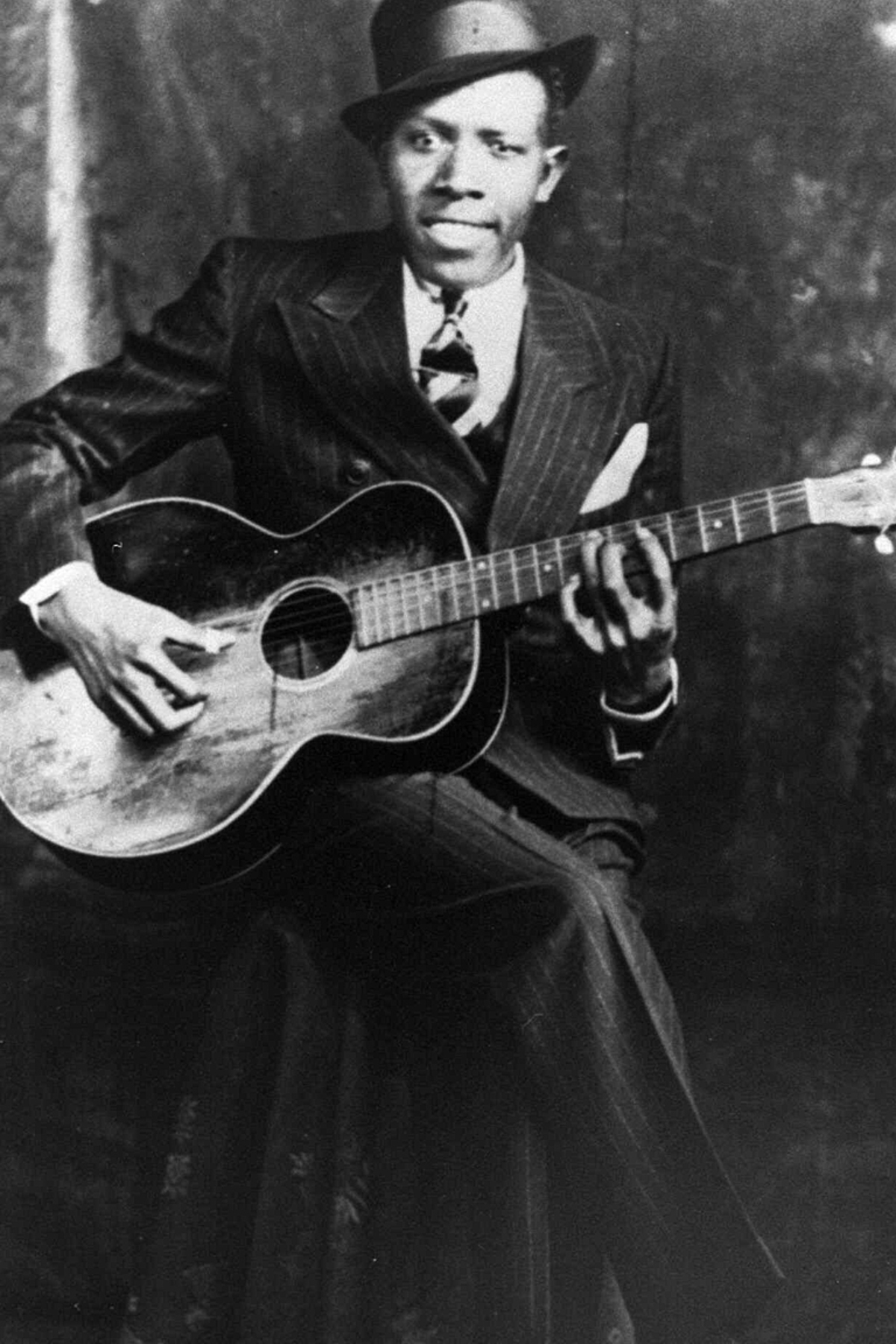
Featured image: Historical promotional portrait of blues musician Robert Johnson.