Mojo Hands, Doorways and Home Protection | Hoodoo in Everyday Black Life
Hall of Records • Culture and Community Life
Hoodoo Heritage Month 2026 · HHM-004
Mojo Hands, Doorways and Home Protection | Hoodoo in Everyday Black Life
Hoodoo was not practiced only by famous rootworkers. Protective objects, prayers, roots, amulets and household customs moved through ordinary Black family and neighborhood life.
Living history belongs in the record too.
Record Summary
At a Glance
Scholars of African American religion and folklore document conjure as a cultural practice that changed across generations but remained embedded in Black community life.
The everyday record includes concerns about protection, luck, healing, money, conflict, family stability and personal safety.
Hoodoo did not require a temple, formal clergy or public institution. Practices could be portable, private and woven into ordinary routines.
Community Record
The Home Was Part of the Spiritual Landscape
Hoodoo traditions could be carried in a pocket, placed near a doorway, prepared in a kitchen, buried in a yard or passed quietly between relatives.
That portability helped traditions survive without requiring a formal building or institution.
The household itself could become part of the spiritual map: entrances, bedrooms, kitchens, yards and personal belongings were places where protection, prayer and intention could be concentrated.
This is one reason Hoodoo history can be difficult to archive. Much of the practice happened in private spaces and was transmitted through people rather than organizations.
Thresholds and Boundaries
Why Doorways Mattered
A doorway is more than architecture. It is the point where the outside world enters the home.
In household spiritual practice, thresholds could therefore carry special symbolic importance as boundaries between inside and outside, safety and danger, family and stranger.
Historical descriptions of conjure repeatedly place protective materials around spaces, entrances, yards and personal environments.
The important historical idea is not that every Black household followed one doorway ritual. There was no single universal formula. The pattern is the repeated use of ordinary domestic space as part of spiritual protection.
Material Culture
The Mojo Hand Was Made to Travel
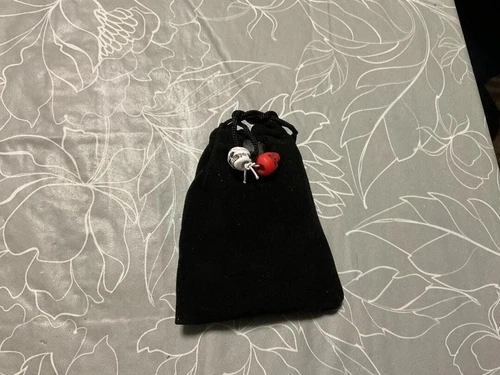
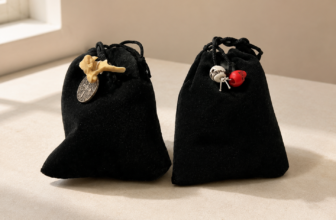
Mojo hands are among the best-known portable forms of Hoodoo material culture.
Historical descriptions of conjure document small prepared objects containing selected materials that were carried on the body, kept among personal belongings or maintained for a specific concern.
Their significance was not simply the bag itself.
What mattered was the relationship between the object and the work surrounding it: the concern being addressed, the selected materials, the prayer, the preparation and the person carrying it.
A mojo could therefore function as a private spiritual object in a world where public religious expression did not always contain everything a person believed or practiced.
Everyday Objects
Small Things Could Carry Large Meaning
Historical descriptions of Hoodoo and conjure repeatedly include ordinary or easily carried materials.
The material could be simple while the meaning was highly specific.
A root was not automatically a working. A bottle was not automatically a spiritual object. A written name was not automatically a petition.
Context, intention, inherited knowledge and preparation gave the object its role.
Domestic Life
Spiritual Practice Could Look Ordinary
One of the difficulties in documenting everyday Hoodoo is that spiritual practice did not always announce itself as ritual.
A preparation could happen in the same house where people cooked, raised children, worked, rested, argued, prayed and cared for relatives.
Materials associated with spiritual practice could exist beside ordinary household items without outsiders recognizing their meaning.
That quietness helped knowledge remain inside families and communities, but it also meant that much of the historical record was never formally written down.
Family Transmission
Not Everything Was Taught in a Book
Hoodoo knowledge could move through observation, oral instruction and repeated family practice.
A child might remember what an elder carried, what was placed near a doorway, what prayer was spoken during a crisis or what relative people visited when ordinary solutions were not enough.
Those memories may appear small individually, but together they form part of the cultural archive.
This is why family testimony matters during Hoodoo Heritage Month: formal archives often preserve the famous worker, while families preserve the everyday practice.
Everyday Concerns
Hoodoo Addressed the Problems People Actually Had
Historical Hoodoo practice was often concerned with practical problems.
Spiritual work could focus on keeping danger away from a person, family, home or personal space.
Economic survival, employment, luck and financial need appear repeatedly in the broader Hoodoo record.
Folk healing, prayer and herbal knowledge often existed beside spiritual interpretations of illness and misfortune.
People sought spiritual assistance when dealing with enemies, household tension, unfair treatment or threatening circumstances.
Luck, opportunity and the desire for circumstances to turn in one’s favor were also part of everyday concerns.
The Hall records these concerns because they reveal something important: Hoodoo was not only an abstract spiritual philosophy. It responded to daily life.
Hoodoo Heritage Lens
Survival Did Not Always Look Dramatic
Hoodoo history is often illustrated with famous rootworkers, old photographs and extraordinary stories.
But survival culture also lived inside ordinary routines.
It could look like carrying something private before going to work.
It could look like an elder praying over the house.
It could look like keeping an object near an entrance, preparing something quietly in the kitchen, or giving a relative instructions that were never written down.
Ordinary does not mean historically insignificant.
Archival Question
How Do You Archive Something Meant to Stay Private?
Hoodoo creates a particular archival challenge.
Some practices were intentionally private. Some knowledge was family-specific. Some workers did not explain their methods publicly.
Researchers therefore have to work with several kinds of evidence: oral histories, family memories, folklore collections, material objects, published accounts and community testimony.
None of those sources should automatically be treated as identical. A family story is a family story. A documented artifact is an artifact. A scholar’s interpretation is an interpretation.
Preserving Hoodoo responsibly means keeping those distinctions visible.
Living Archive
Your Grandmother’s House May Be Part of the Record
What did your family keep above the door?
Did an elder carry something specific when leaving the house?
Was there a bottle, root, prayer, charm or household custom everybody understood without explaining?
Was there someone in the neighborhood people quietly visited when they needed protection, luck, healing or help?
These questions matter because everyday Hoodoo history often survives first as memory.
Community Archive
Help Us Record Everyday Hoodoo
Hoodoo Heritage Month submissions are reserved for the descendant Black American community, including Foundational Black American, Soulaan and ADOS contributors.
The Hall is especially interested in family and neighborhood history that may never have entered a formal archive.
That can include photographs, oral histories, household objects, remembered practices, family testimony, local workers and traditions associated with protection, luck, healing or home life.
Sources
Review the Record
- Yvonne Chireau — “We All Believed in Hoodoo”
- Smithsonian Libraries — Hoodoo, Conjuration, Witchcraft and Rootwork Holdings
Research note: Hoodoo practice varied by worker, family, region and generation. This record documents recurring patterns in the historical and folkloric record rather than presenting one household custom as universal.
Featured image: Haus of Asseveration — Hoodoo Heritage Month 2026 campaign artwork.
Mojo Hand Collection
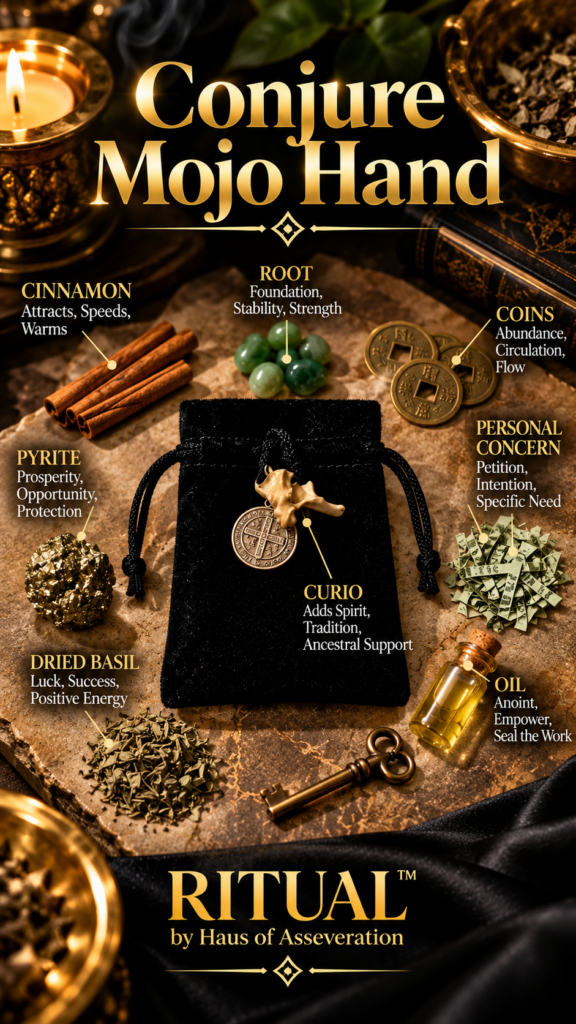
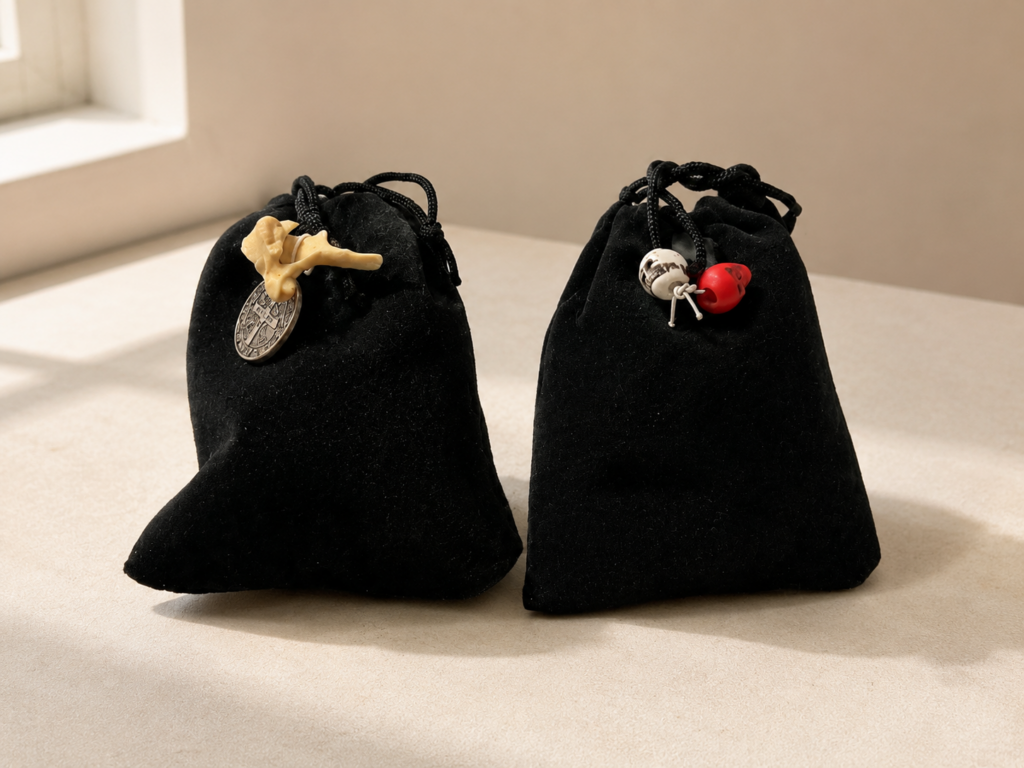
Hoodoo practices involving protection, luck, healing, conflict, and household wellbeing were woven into everyday Black family and neighborhood life. Objects such as mojo hands, roots, bottles, prayers, and amulets could be carried, placed near doorways, prepared in kitchens, or kept among personal belongings.
The record emphasizes that practices varied by family, region, worker, and generation, and were often transmitted privately through observation, oral instruction, and memory. Preserving this history requires distinguishing documented artifacts, oral testimony, inherited memory, scholarly interpretation, and spiritual belief.