


Walter Scott | Bystander Video, Federal Guilty Plea and 20-Year Sentence
Hall of Records • Justice & Accountability • Disputed Death
Walter Scott | Bystander Video, Federal Guilty Plea and 20-Year Sentence
Walter Scott, 50, was fatally shot while running away from North Charleston police officer Michael Slager after a traffic stop. A bystander’s video became central evidence in the case.
Record Summary
At a Glance
Walter Scott, 50, was fatally shot while running away from North Charleston police officer Michael Slager after a traffic stop. A bystander’s video became central evidence in the case.
Official Record
What Authorities and Courts Established
Slager was charged in state court, where the murder trial ended in a mistrial. He later pleaded guilty in federal court to willfully depriving Scott of his civil rights by using unreasonable force.
Public Dispute and Social Context
Why the Case Became a Flashpoint
The bystander video showed Scott running away as Slager fired. The footage became a major example of how independent video could alter the public understanding of a police shooting.
Legal Outcome
Where the Record Stands
A federal judge sentenced Slager to 20 years in prison using second-degree murder as the sentencing cross-reference. The Fourth Circuit later affirmed the sentence.
Why This Record Matters
The 2012–2020 Racial-Justice Era
Scott’s case became an important point in the period’s accountability debate because video evidence produced a stark contrast between an officer’s initial account and the event captured by a civilian witness.
Sources
Review the Record
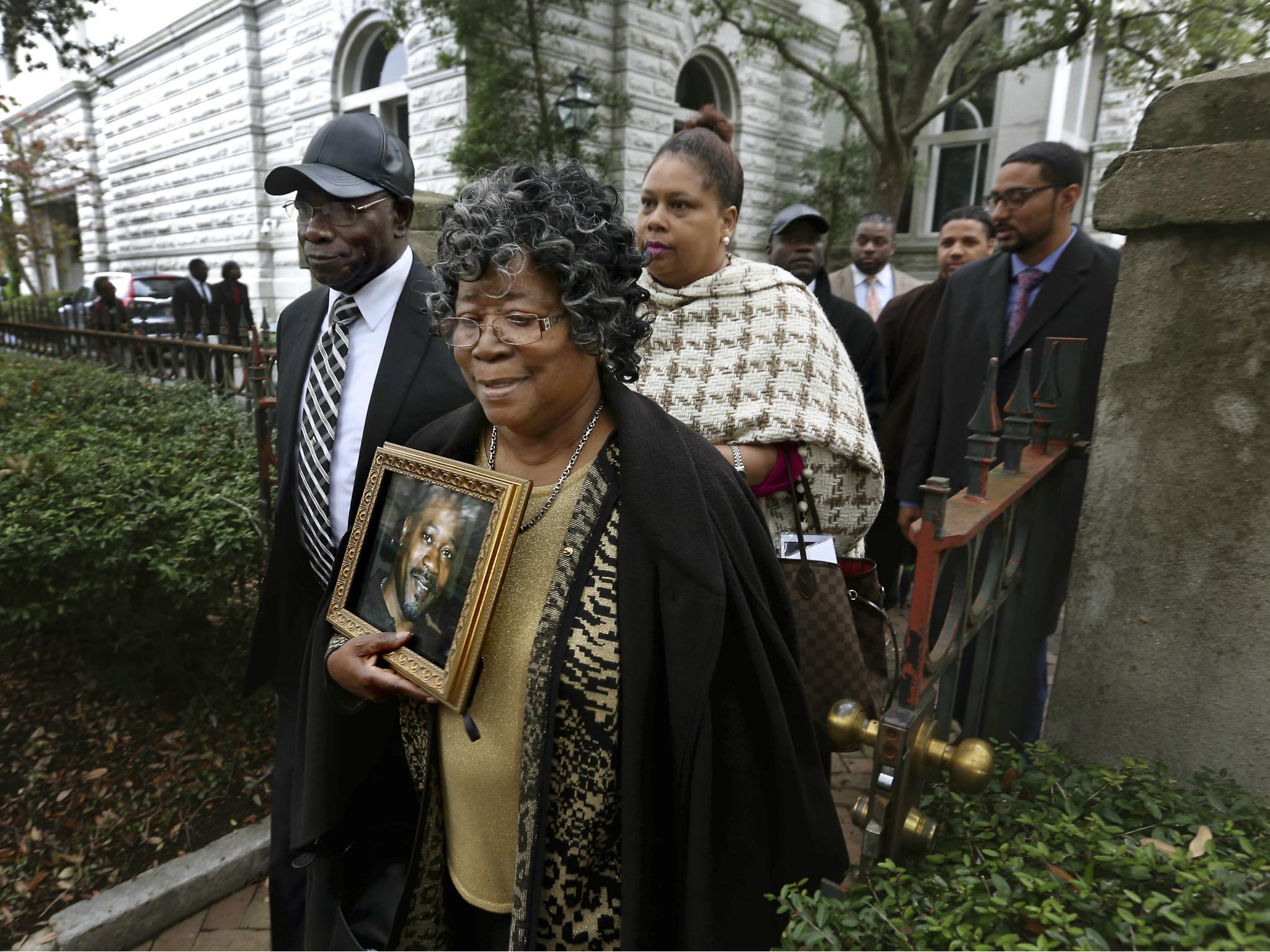
Featured image: Editorial image showing Walter Scott’s family carrying his photograph after federal sentencing.
Image-use note: External editorial image. Confirm reuse rights and attribution before publication.
“Disputed Death” is a Hall of Records editorial classification used to preserve deaths that became significant public disputes about race, policing, self-defense, custody, institutional accountability or the legal system. It does not override a court verdict, medical-examiner ruling or prosecutorial finding. This entry separates official legal outcomes from family concerns, public controversy, historical interpretation and unresolved questions.





