


Hayti, Durham | Black Community, Enterprise and the Cost of Urban Renewal
Hall of Records • Places and Cultural Geography
Hayti, Durham | Black Community, Enterprise and the Cost of Urban Renewal
Hayti grew from a post-Civil War Black community into a center of faith, business, education and culture in Durham before highway construction and urban-renewal policy cut through the district.
Record Summary
At a Glance
Hayti’s history records both Black institution-building and the physical consequences of twentieth-century redevelopment on established Black neighborhoods.
Place Record
A Community Built After Emancipation
Hayti developed as freed Black residents created churches, businesses, schools, entertainment spaces and community institutions in Durham. The district became closely connected to the city’s wider Black business ecosystem.
Disruption
A Highway Through the Community
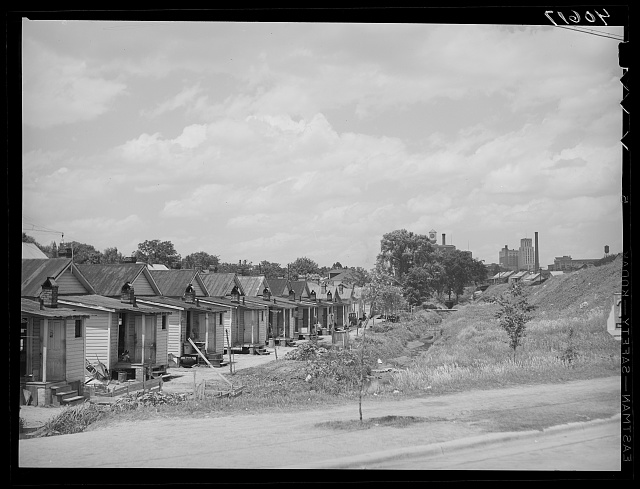
Twentieth-century redevelopment and construction of the Durham Freeway disrupted Hayti’s physical and economic center. Buildings and blocks disappeared, businesses lost foot traffic and the neighborhood’s geography was permanently altered.
Continuity
Hayti Is More Than What Was Destroyed
The Hayti Heritage Center, housed in the historic St. Joseph’s AME Church building, continues to preserve and produce Black culture. The Hall records Hayti as a place of creation, displacement, preservation and ongoing community life.
Sources
Review the Record
- Hayti Heritage Center — History of Hayti
- Hayti Heritage Center — Current cultural mission
- Library of Congress FSA/OWI Durham photographs — historical image context
Featured image: Jack Delano / Library of Congress, FSA/OWI — backs of houses in the Black district of Durham, North Carolina, May 1940.
Image-use note: FSA/OWI photographs in the Library of Congress collection are public domain and free to use and reuse; credit the Library of Congress.
This entry is an editorial archive built from the cited public record. Official findings are distinguished from allegations, family concerns, historical interpretation and unresolved questions. Reverify active cases and image rights before publication.





